

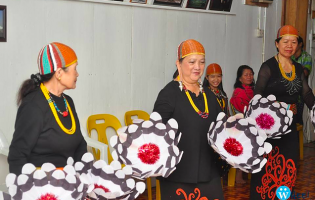

The issue of work-life balance is something that may be a struggle for many of us, as we are committed to many things such as work, family, friends and religious practices. It is challenging given that all of us are given equal amount of time each day, and how we fit in our priorities are crucial so that we can give our best for everything.

Image credit: Project WHEE Facebook page
Jenette Ulun,
a woman of a rural community in Bario, is an outstanding person who has many responsibilities which take up a lot of her time, but she is able to cope with them well. Bario, a village located in the northeast of Sarawak and bordering Kalimantan, Indonesia, is home to the Kelabit community which Jenette is a part of. With the privilege of being surrounded by highlands and being far from the city, it is one of the rare places in the world which has retained its natural beauty. One could enjoy its scenic view day and night. Bario is well known for its rice cultivated by the community through the wet rice cultivation method. In recent years, a lot of emphasis has been given to ecotourism as the number of tourists has increased. This trend has encouraged a great desire amongst the locals to ensure that the Kelabit culture is kept alive by the younger generation.
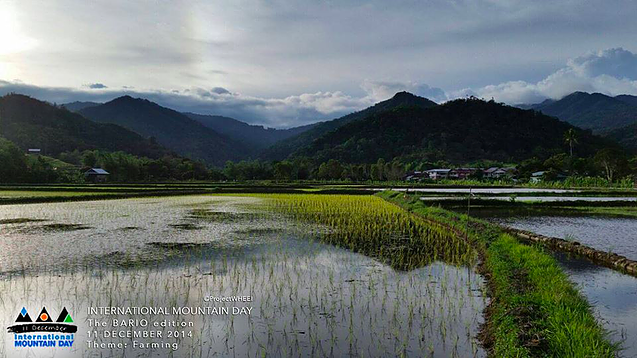
Image credit: Project WHEE Facebook page
Jenette and her family lived in Miri for thirty-two years with her husband being the breadwinner of the family while Jenette took care of the family and at the same time, she was involved in beading. After her husband’s retirement, the family decided to return to Bario for good. Since then, they have been very much a part of the community. One might find it odd that a family, after settling down for 32 years in a city, would uproot itself and return to the village. For Jenette, she returned because she missed her home village where she owns ancestral land. She had always been thinking of tilling the land that her parents had left for her, and her husband’s retirement was the final factor in her decision to move back to Bario.
Since returning to Bario, Jenette has achieved much in many ways. In the house where Jenette and her family live, she runs a homestay called Ambassador’s Homestay. In Pasar (market) Bario, Jenette owns a craft shop where she sells handicrafts she makes. These handicrafts which are mainly made using beads are in the form of traditional accessories like brightly-coloured necklaces called kaboq, ladies traditional belts known as beret ba’o and also beaded cap called peeta which are part of the Kelabit costume. She also uses the beads to make more modern accessories like bracelets and normal necklaces. These handicrafts enable her to share part of the Kelabit culture with others. Jenette is able to make the handicraft when she is not busy with farm work such as planting or harvesting.

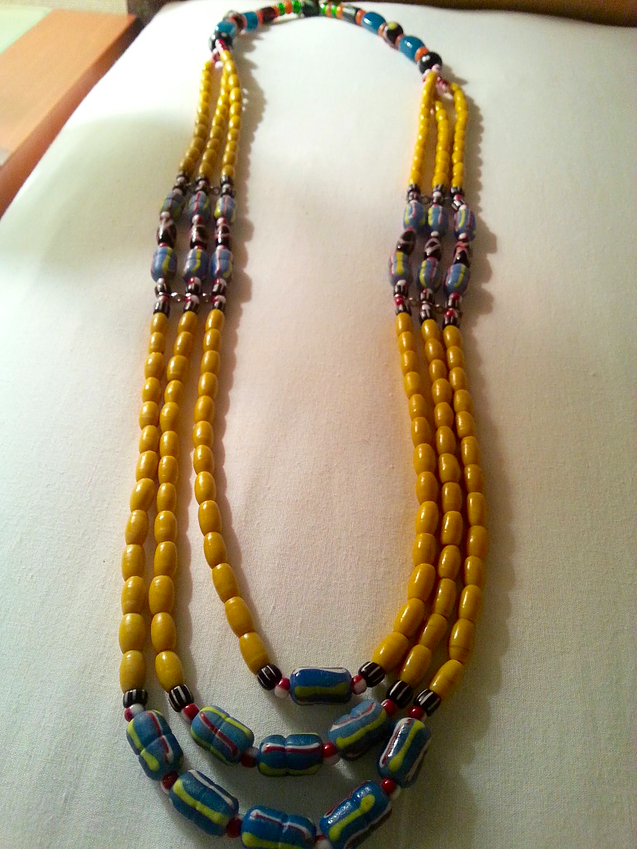

Image credit: Project WHEE Facebook page
Besides work, Jenette is involved in community activities such as being a RELA security guard at the Bario airport. She is involved in the Village Security and Development Committee (JKKK) of Bario Asal. This organisation has a few responsibilities such as planning state government funded projects for the community and to develop and carry out projects that foster cooperation between governmental departments and non-governmental organisations (Ministry of Rural and Regional Development, 2013, as cited in Raja, 2015). All these activities conducted are to benefit the longhouse community. Through Jenette’s involvement in this organisation as well as the others, they are able to bring about active changes in their community. Jenette also heads the local Women’s Affair Association which meets regularly.
Jenette acknowledges that there are challenges in maintaining work-life balance, especially when there are various events happening concurrently. There have been instances when activities in the church and in the community take place at the same time, but through prioritising her responsibilities, she is able to manage with every one of them.
After all these years of being back in Bario and being very busy with all her commitments and responsibilities, she feels glad to be home because she has a place in her community. Having the opportunity to contribute to the progress of the village not just by planting rice and supporting the women folk but also by preserving the culture and heritage of the Kelabit community is a joy that Jenette has found.
References
Raja, D. M. (2015). Impact of the Introduction of Mechanized Agriculture on a Traditional Rice-Growing Community in Sarawak, Malaysia. Retrieved January 27, 2016, from
https://webcache.googleusercontent.com/search?q=cache:X0JDiecoxMMJ:https://atrium.lib.uoguelph.ca/xmlui/bitstream/handle/10214/9238/MarcusRaja_Davin_201509_Msc.pdf?sequence=1&isAllowed=y
By: Jayne Sunita