


The rapid development of the Internet in Indonesia has led to a transformation in various fields, such as education, social and cultural. Through cyberspace, many things can be done by the community. The Internet provides great benefits in improving the quality of people’s lives and contributing to the improvement of the welfare of the population and providing convenience in obtaining information and knowledge; correspondence and communication via e-mail, Facebook, Twitter, and other social media; sharing of information and data; entertainment, and doing business.
However, the emergence of negative activities such as plagiarism, defamation, phishing, pornography, cyber-bullying, cyber-stalking, cyber-gambling, and so on, negatively impact Internet users and can even affect a person’s psychological development, especially children and teenagers, which might seriously affect the young generation of Indonesia.
In conducting activities in cyberspace, we must realize that ethics is the same as ethics in the real world. Good conduct in the real world is also good in the virtual world and vice versa. Ethics in cyberspace (cyber ethics) need to be learned from an early age to avoid bad habits in cyberspace. Cybercrimes usually begin with ignorance of ethical values.
Parents shoulder the responsibility to be more caring and alert in this digital era. In the book
“Mommy Brain” by Katherine Ellison, it is stated that there is a need to destroy stereotypes of the degradation of a mother’s brain (stupidity). If a woman as a mother is not intelligent, the human race would not have gone past the Stone Age.
As Brigham Young stated, “When you educate a man, you educate a man; when you educate a woman, you educate a generation”.
Much focus has been placed to meet the United Nations’ Millennium Development Goals (MDG). In particular, great effort has been made toward two of the eight goals, for example, to empower women and reduce gender inequality. However, challenges still remain to achieve these goals in the era of Information and Communications Technology (ICT), as much is still in the dark regarding the progress women have made in ICT. Several sources have highlighted that women are behind men in their engagement with ICT, but policymakers are having difficulty in addressing this issue, because there is no global standard or index to assess, measure, and analyze this inequality. Only few statistics are available and even these provide insufficient information about the current gender gap, because they typically convey data aggregated across gender. Furthermore, many governments do not periodically collect coherent ICT statistics. The lack of quality index is a severe problem, because it makes it difficult for the government to develop targeted ICT trainings and devise policies to support women in ICT. As a result, the gender inequality in ICT can persist and even continuously grow, especially in countries and areas where women need the most support. Therefore, the WIDI project was introduced to rally support among global stakeholders to tackle this very important issue.
Demographics of Indonesia
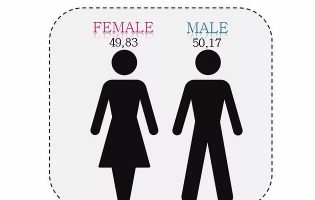
With a population of about 250 million people, Indonesia is the fourth most populous country in the world. Indonesia’s ethnic composition is very varied because the country has hundreds of ethnic groups.
Nevertheless, more than half the population of Indonesia is dominated by the two largest ethnic groups, namely Javanese (41% of the total population) and Sundanese (15% of the total population). These two ethnic groups are from the island of Java, the most populous island in Indonesia that covers approximately 60% of the total population of Indonesia.

An important force in the demographic composition of Indonesia which has a relationship with the economy is the youth in Indonesia.They are the working force. The average age of the Indonesian population is 28.2 years (estimated in 2011). This is the median age, meaning half of the Indonesian population is above 28.2 years old and the other half under the age of 28.2 years.
Regarding gender, the average median age of women in Indonesia is 28.7 years, while the median age of men is a year younger (27.7 years). In 2010, about 19 percent of Indonesia’s population are children aged under ten years, about 37 percent below twenty years and about halfof Indonesia’s population under the age of thirty. These figures show – from a demographic perspective – that Indonesia has great potential in terms of productivity and creativity.
This can be favorable when used to accelerate development. However, it would be a disaster if it is not balanced with the quality of Human Resources (HR). That is, they are not absorbed optimally into the workforce due to the lack of higher education.
ICT Gender Issues in Developing Countries
Back in 2003, Dr. Nancy Hafkin (a pioneer in networking and development information and electronic communications) outlined the issues that women face in developing countries when it comes to ICT. Unfortunately, the situation has not changed much since then, as these issues are still relevant in Indonesia today. They are the following:
1. Infrastructure : Basic ICT infrastructure in developing countries is not readily available for many women who live in rural, proverty-stricken areas.
2. Education and Skills : In contrast to women in developed countries, many women in developing countries only speak their local native tongue and are not educated in English, which limits their access to ICT usage.
3. Social and Cultural Issues : It is not easy for women to have access to the same resources as men, because women are socially disadvantaged. Also, they tend to face a cultural notion that they are incompetent.
4. Financial Resources : Many women in developing countries do not have the financial resources to afford ICT devices or use them properly.
5. Limitation of Media : In developing countries, most apps and programs are still male- centered.
6. Limited Usage : Many women in developing countries only use e-mail, because of the prohibitive cost and difficulties in using ICT devices.
7. Power and Decision Making : Many women in developing countries do not have the position or freedom to make their own choices.
8. Privacy and Security : Some women view the Internet as being unsafe, because of the numerous cases of cyber-sexual harassment and crimes that violate women’s privacy and well-being.
Access to ICT can enable women and men to gain stronger voices in their communities, their governments, and the world. The implication of the disparity in information access, especially in developing countries is that, unless special interventions are made, most women will not benefit from the information society to the extent that men do, which means that more than 50% of the world’s population may be overlooked. ICT goes hand-in-hand with economic empowerment.
The potential to advance women economically may be the most important and transformative aspect of ICT education. Empowering women and improving the efficiency of their work are critical factors to reduce property. Mounting evidence confirms that women’s improved economic status produces many positive economic and welfare outcomes for children, families, and societies. The International Development Research Center of Canada (IDRC) concluded that ICT can contribute to poverty reduction, improvement in education, health and social services delivery, broader government transparency and accountability, and help empower citizens to build social organizations concerning rights and gender equality.
The Need for Sex-Disaggregated ICT Data
In order to address and change many of these ICT issues facing women in developing nations, countries need to be able to stack and measure the skills and usage of their local women and analyze this data against a number of factors and measurements. Only then can policymakers take this data and use it to advocate for more funding and programs aimed at closing the gender gap in ICT and to address the many negative implications that come along with deficiencies in ICT knowledge and skills.
Sex-disaggregated statistics and indicators are data that report for males and females separately, rather than as a combined (aggregate) total. Gender-sensitive indicators compare the situation of males to females and show an aspect of their relative advantages and disadvantages.
In most data, the sex of the respondent is often neither identified nor reported when the data is collected. There are several reasons for this lack of sex-dissaggregated ICT data. One major reason is the lack of funding. Another problem is that policymakers incorrectly presume that the subject of ICT is gender-neutral. This is incorrect, however. Many studies have shown that ICT impacts men and women differently, and in almost every case, women experience more disadvantages due to limited access and education, and economic restraints. In developing countries, women have more ICT access constraints due to poverty, illiteracy (including computer illiteracy), language barriers, and lack of power within the family structure.
Sex-disaggregated statistics and indicators are helpful in the following ways:
1. Sex-disaggregated data help policymakers reduce the gender digital divide.
Most developing countries do not have ICT policies specific for women. Sex- disaggregated statistics and indicators can help policymakers to address important and pressing issues in this regard. Policymakers lack knowledge of the gender aspects of technical issues, while gender advocates are unfamiliar with IT issues. UNDP says that “Without data, there is no visibility; without visibility, there is no priority.”
2. Sex-disaggregated data can accurately represent the current state of women and ICT.
Nancy Hafkin and Sophia Huyer said, “the lack of data dissagregated by sex now makes it impossible to assemble gender-specific indicators of ICT in developing countries.”
3. Sex-disaggregated data can suggest needed educational content and effective training methods for women.
Nancy Hafkin mentioned that content access data is completely unavailable for developing countries. The data could be in the form of specific sites or types of sites most commonly accessed, differentiated by sex. The specific sites for women can train them in what they need. The Department of Economic and Social Affairs under the United Nations Division for the Advancement of Women said that gender-aware consultation and participation methods and tools are covered to assess the needs and priorities of women and to ensure ICT is utilized as a tool for women’s empowerment. These include training programs and planning and evaluation methodologies.
4. Sex-disaggregated data can empower women and reduce gender inequality and poverty.
Nancy Hafkin and Sophia Huyer said, “ICTs can be important tools for promoting gender equity and empowering women through easing workloads; increasing knowledge of rights and possibilities; increasing self-esteem, social status and confidence; and contributing to increased income.”
Therefore, there is a definite need and urgency for generating standard and reliable statistical data around ICT and gender if we hope to close the digital gap and address other socio-economic disadvantages that are plaguing women in developing nations today.
Indonesia
Current Status of ICT Related Statistics
According to the report of Research on Development and Management ASEAN Women’s ICT Development Index (WIDI) 2015, where Indonesia is part of the program, the relevant ICT statistics in Indonesia is extracted and divided into Accessibility, Usage and Skills, which are adapted to our research. The Indonesian women involved consist of housewives, business women, career women and students.
Accessibility
ICT is defined as the tools that people use to share, distribute and gather information and communicate with one another. Article 19 of the Universal Human Rights Declaration, WSIS, Declaration of Principles Building the Information Society a Global Challenge in the New Milleniun, Geneva, 10 December 2003, states that “every person must have the means and access to information and should be able to exercise the right of the freedom of expression, which includes the right to seek, receive and impart information and ideas through any form of media, regardless of frontiers.”
The International Telecommunication Union (ITU) has recently reviewed all data for ICTs from 2000 until 2015 and reported that ICTs have been growing in an unprecedented way, providing huge opportunities for social and economic development in the past 15 years. According to the new figures of ICT progress, there were 3.2 billion Internet users in 2015 compared to 4 million in 2000. That means the number of Internet users had increased 800 times in 15 years.
According to the Global Information Technology Report in 2015 – ICTs for Inclusive Growth, The World Economic Forum and INSEAD 2015, the reason for such rapid growth is that ICTs enhance social development and transformation by improving access to basic services, enhancing connectivity and creating employment opportunities. They are now pivotal in enhancing competitiveness, enabling development and bringing progress to all level of society. ICTs have incredible power to improve people’s lives, foster economic growth and create opportunities for individuals, companies and nations around the globe. WSIS recognizes ICTs as vital tools for women’s empowerment in 2003.


In the span of three years, these trends have started to increase. The latest research predicts that until 2020, the number of consumers who purchase secondary goods and services will increase significantly (consumer class) in comparison to those who purchase basic goods (Godjali et al.,
2014). These types of consumers will develop an all-rounded digital lifestyle because of the push from the technological industry that motivates them to use more than one device. The growth of the consumer class can also be seen from the increase in users of smartphones, PCs, and Web services. Gartner, an American IT research company, predicts that through 2017 there will be a 39% increase in electronic device consumption.
Currently, there are 266 million smartphone users in Indonesia (Pyramid Research in Godjali et al., 2014). This phenomenon is caused by several factors including competitively-priced smartphones. 7.3 million units of smartphones were sold in the Indonesian market in 2014 (Nistanto, 2014). Because of that, Indonesia has become the largest smartphone market in Southeast Asia with 68% growth in 2014. This statistic does not include the second-hand smartphone market which also provides good prices with unquestionable quality. At such competitive prices, consumers are able to easily acquire new smartphones of local or international brands.

The increase of smartphones and tablet users is indirectly reflective of the increase in user’s level of activity in creating social networks. This explains how social media and its applications are the final products of digital development. In the context of Indonesia, the users of messenger services have increased significantly, with 10 million users of KakaoTalk and Line, and the userbase of WeChat increasing 50-fold since February 2013.
This phenomenon would seem reasonable and is associated with a number of mobile phone/smartphone products that can be easily obtained. As we know, the price of the smartphone is very affordable and is not a luxury anymore in Indonesia.
Social networks become the top reason to use the internet. Not less than 87% of internet users in Indonesia admitted to using social media when connected to the Internet. The second reason people use the Internet is to search for information and browsing at 68.7%. An interesting point is that 11% of Internet users in Indonesia have been buying and selling online. It is no wonder so many observers say that e-commerce is growing well in Indonesia.
Based on users’ age, the majority of Indonesia’s Internet users are between 18-25 years of age, which constitutes nearly half of the total number of Internet users in Indonesia (49%). It can be inferred that the segment of Internet users in Indonesia are those who can be categorized as “digital natives”.
On average, Indonesian Internet users across the archipelago have a secondary education background. This occurs in rural and urban areas in Indonesia as well as in both Eastern and Western Indonesia Areas.
Research conducted in 2014 discovered that female Internet users are higher in number in comparison to males. The majority of these Internet users reside in urban areas. Meanwhile, research conducted by APJII (Asosiasi Penyelenggara Jasa Internet Indonesia) in 2014 managed to provide support for the phenomenon discovered in the previous research, namely that the majority of Internet users reside in the Western part of Indonesia. Nearly all of the provinces in Indonesia have a similar composition ratio of genders. There are only 3 provinces which do indicate a balanced composition between male and female Internet users.
Two out of three of these provinces, namely Kepulauan Riau and East Kalimantan, are dominated by male Internet users. There are 77% and 67% male Internet users in Kepulauan Riau and East Kalimantan, respectively. Meanwhile, females dominate the number of Internet users in DKI Jakarta with a percentage of 73%, in contrast to the percentage of male Internet users of only 23%.
Equally in every province, the highest number of Internet users in Indonesia includes those who have obtained a high school degree. The number of users who have not completed primary school education and who have yet to obtain a post-graduate degree is small. This research indicates that there is no significant difference between Internet users who have obtained a high school degree, be it in rural or urban areas in dominating the number of Internet users in Indonesia in every province, in Eastern or Western Indonesia.
The majority of Internet users in every province, be it Western or Eastern Indonesia, urban or rural areas, are workers and entrepreneurs. Aside from businessmen, the second highest number of Internet users in Indonesia consists of college students and housewives. Meanwhile, there is only a small number of Internet users in Indonesia who are students (primary/secondary/high school).
Usage
Most Indonesian Internet users access the Internet using their cellular phones. Users in Java and Bali rank the highest in the usage of cellular phones to access the Internet. Meanwhile, the highest number of laptop usage to access the Internet is found in Kalimantan (68%), as well as usage of PCs (21%). Previous research (e.g Atmadja, 2006) and Wattegama, et al., 2008) shows that the phenomenon in the telecommunications sector in Indonesia is mainly due to the growth of cellular telephony. Cellular telephony grew rapidly from a 18.76% penetration rate in 2004 to nearly 63% by the middle of 2009 and reached a penetration rate of 91.72% by 2010 (equal to 220 million subscribers). In contrast, the fixed line penetration rate decreased from 3.97 percent in 2004 to 3.82 percent in 2009, and increased at 6.5% in 2010 as did the rest of the world.

Despite its portability, the survey indicates that most users in Indonesia surf the Internet in their private residences. Home has become the most favourable spot to access the Internet through a variety of devices, including cellular phones. More than 80% of Internet users in Indonesia go online at least once a day. The daily average time spent to access the Internet is 1 hour, which comprises 35% of the total number of Internet users in Indonesia. For the duration of time spent online, there are no differences in gender. Still, most users in NTT, NTB, Maluku, and Papua access the Internet for a duration of one hour per day.
Skill
The following survey claims that Indonesians access the Internet for the following reasons, namely, to access social/communication platforms (72%), daily source of information (65%), and to follow trends (51%). Those three main reasons are manifested into 4 main activities: social networking sites (87%), seeking information (69%), instant messaging (60%), and seeking the latest news (60%).

Similar to other countries, the Indonesian government has begun to develop Internet access since the start of the 1980 in public universities (Triastuti, 2013). The Internet gained popularity since the fall of the Soeharto regime in 1998 (Hill & Sehn, 2001). Following the fall, the Internet became a tool for college students to initiate political movements. Indonesian citizens also started to become acquainted with Internet-based activities during that time.
In less than 10 years, the Internet has become more familiar to the general public, not just college students. Additionally, the Internet technology industry has also started to undergo rapid development in numerous fields. The Internet technology industry has not only developed in terms of technology (such as broadband wireless access), but also technical infrastructure (speed of access, application), physical infrastructure (devices used to access the Internet such as tablets, PCs, smartphones), and market development.
The above data (usage and skills) do not highlight sex-disaggregated ICT data and this can be a possible future research.
The Challenges of Indonesian Women in Technology
Referring to our survey of the activities of 150 women consisting of housewives, entrepreneurs, career women and students, the results are as follows:
1. Perception of technology as difficult and men’s zone (Technophobia)
The scarcity of female interest in technology is common knowledge. Most of the time they feel inadequate and incompetent. It was deemed unnecessary for women to understand new things, as if it was inappropriate to increase knowledge or become advanced. This perpetuates the mindset of women who are reluctant to get out of their comfort zone.
There is still inequality between women and men in the world of technology. The lack of interest in women is due to the perception of women that technology (computer science) is difficult and belongs to men. Closely linked with education, the higher their education, the more likely this perception will change. Women absorb technology easily. Apart from that, the grasp of the English language is a challenge. This is more so of housewives than business or career women.
2. Educational Institutions
The educational institution plays a role where women get an education related to technology or computer science. Educational institutions in Indonesia, especially in computer education, are not balanced in distribution whether urban or rural. Through the deployment of equitable educational institutions, it can make it easier for women to get an education, especially related to computer science / IT so the IT field is not only cultivated by men, but also women.
In Jakarta and other big cities, some schools have started teaching programming. While in the rural areas it has not been as extensive as the big cities. So between the schools, there is still a gap. Outside the big cities (rural area) there should be a special IT class, so they become accustomed to learn about IT/Computer Science as soon as possible.
Referring to the following table (source: Internet, 2015), we can see that there are more uneducated women compared to men, both in the urban and rural areas. This is one of reasons of the lack of competency in computer skills in women.
According to a study (Accenture research), 96% of career women stated that career capital is an important factor for success. Career capital is a variety of skills that define and pursue a career, to help individuals navigate changes and face the future optimistically. These skills include computer skills.
3. Family Support
The advancement of women in education and adopting technology is very closely related to the family, where the support of a spouse (if married) or family is needed.
The interests of women, especially housewives, in technology can be increased and begin from school and their family. It would not be too difficult to introduce technology to children aged 3-5 years due to the digital era, because many of them are used to playing games on gadgets. This happens to be one of the reasons women would be interested in technology. They can also teach and monitor their children’s usage of gadgets for doing homework and for playing games.
Many women in rural areas have domestic problems, especially married women, like domestic violence, extramarital affairs, and accidental marriage. Because of these problems, women are unable to improve themselves. According to Media Research Center, Indonesia, 38% of girls under 18 years old are married, compared to 3.7% of males of the same age.
Profiling Indonesian Women using the Internet
Behaviour
As mentioned above, information of female Internet users is more abundant than males. Some of the behaviour of women using Internet are as follows:
· Women mostly use smartphones to access the Internet
· Women mostly use social media when connected to Internet
· The preferred social media networking tool that they use is Facebook (72%)
· Women are active users (they use the Internet every day)
· They have been using the Internet for more than 5 years
· The range cost for subscriber Internet is between Rp. 50.000 – Rp. 200.000
· The duration of Internet usage is between 1 – 4 hours per day
· Their access to the Internet is through network providers and WIFI/Hot Spot


Information needs (content)
1. Activist
The recruitment of leaders in organizations (kader) and committees. Information about technology as a tool for supporting their activities, computer literacy (report). Information about health, environment, politics, entrepreneurship, etc.
2. Housewife
Needs information about individual needs (religion, spirituality, leisure activities, tourism, school/college information, information for happy families, hobbies, food, etc.)
3. Women Entrepreneur
Needs information about funds, business opportunities, pricing, new products, design, marketing and employees. Some of them look for information about the environment (go green), work safety, exhibitions, etc.
4. Career women
Mostly needs information about career opportunities, promotions, certification, improvement for using technology, technological updates and any information related to her job.
5. Student
Searching for information for schoolwork, downloading applications (games, music, social media, etc), public figures, tutorials (study).
Conclusion
More than half of Internet users in Indonesia are female (51%). Even in Jakarta, 73% of Internet users are women. From a business standpoint, wholesalers can consider selling products to women who are likely to start a business online. No doubt, with a population of women almost equal to the number of men, women are also human resources that can be involved in the development of the country’s economy.
With the high penetration, it can be concluded that women in Indonesia have already played an important role in ICT. However, the reach in rural areas and among under-educated women needs to be expanded. With 88.1 million Internet users, an online presence is no longer an option but has become a necessity if a business wants to survive and thrive in today’s era. All businesses need to create a website in order to grow. This is also applicable personally as women empower themselves to live a more productive life and to raise and educate their children.
In this era, so many opportunities are available to women. Businesses can have websites with responsive designs to impress customers. They can also make use of multiscreen where people not only access the Internet from one screen. Social media will have an important role in business because it is the one reason most people connected to the Internet. Many have already started thinking about business strategies involving social media.
In addition to social media, the main activity on the Internet is searching for information. This includes when customers want to buy a product. Marketing strategies that utilize search engines such as Search Engine Marketing and Search Engine Optimization (SEO) can have a strategic role for business. A good start is to learn how to utilize Google for business. In online business, consider selling products where females are the target market. They are the majority who use the Internet.
There is still a long way to go before all the people of Indonesia can take advantage of the potential of ICT. The road is even longer for girls, especially women in cities with low income citizens and poor infrastructure (Internet access).
How the Internet is a necessity at this time is because everything is able to move faster. Women as mothers are multi-talented. She is not only a mother taking care of and educating her children and managing the household. Some women have other roles as business women, career women or activists. The growth of the Internet gives more opportunities to them to handle everything simply and efficiently.
Based on interviews with business women, activists and career women, on how they can do business or work and still see their kids, keep fit and have social time with good friends, they said that almost every day they use their smartphones to arrange and plan events related to meeting schedules, correspondences with clients while communicating with their spouse, children or friends. The biggest problems for them are city traffic, weather (rain) and difficulty of transportation which can be overcome by using online applications like online delivery, online reservation, online shopping and they can also exercise at home to get fit, using video (Youtube) and many more.
According to them, the Internet is very important for everyday life. Some of the reasons why they think the Internet is a positive influence for them are:
· improve skills
· explore self-confidence
· personal productivity
· finding information
· networking
· business
· engaging in hobbies
· entertainment (music and video)
The Internet also has negative influences:
· addiction
· lack of human interaction
· not all information on the Internet are useful or accurate
· cyber crime
· no privacy
Woman are aware of this situation. Unfortunately in Indonesia, none of ICT policies, as well as the National Broadband Plan, mentions specifically about gender or the promotion of women’s access to the Internet and ICT. In addition to implementing concrete targets for women’s access, the government should increase public education initiatives for improving digital literacy through training programs and capacity building.

The Benefit of Blogging and Social Media Interaction
More people access the Internet via mobile phones than Internet on a computer network. The reason is because it is easy and portable.
Internet users in large cities are mostly women. From teenagers to housewives. Besides being used for socializing, it is also used for various purposes in support of their activities. Internet users are mostly women because women in Indonesia like to socialize and interact. For example, utilizing the chat programs, social media, online shopping and other applications.
Popular online activities are blogging, Facebook, Twitter and Instagram. Working women and housewives utilize social media accounts for their activities as follows:
1. Production of science. Indonesian Women who have expertise and experience in specific areas share these on their personal blogs. For example, parenting, culinary skills, travel and various other disciplines. They will share based on science combined with their experience, so what you share will become richer and useful to readers.
2. Networking. From visiting each other’s blogs or websites, they take friendships in the virtual world into the real world. In addition to exchanging contacts, they also share opportunities, thus supporting the business of each other. From this activity, bloggers and netizens who are mostly of women would create or join a community that already exist. For example, Mom Community Blogger, Community Blogger Women, Hijabers Mom, Mommies Daily, Female Daily and others. All are members of the same according to their interests.
In fact, networking is up to the ASEAN level. Once there was even an ASEAN Blogger Community in Solo, Central Java and Bali. Presenting Bloggers from all ASEAN countries. This community helps missions from ASEAN countries together.
3. Business. Working women or housewives in Indonesia usually have a side job through online activity. For example, opening an online store for their handicraft such as souvenirs, culinary creations, writing services and consultancy. Blogs and social media are widely used to facilitate the marketing of products and services to their target market.
The increasing use of blogs and social media as a facility to market a business, obtain information and networking creates increased economic growth. I experienced the impact of Internet usage in Indonesia. Since the last five years I have gotten many opportunities and the benefits from the Internet, such as blog writing opportunities. Writing a blog is not just writing. It also needs promotion through social media to ensure the article reaches a wider audience. Of the various articles that I have written, some brands are interested to hire me as a writer for their brand campaign in my own personal blog. At present, I work 80% online because I am a copywriter for several brands and organization websites.
Writing skills are honed with the help of the Internet as it increases the opportunity to share, meet lots of people and earn. Several times I was a guest speaker in a training blog on social media use.
As an example, we strongly agree and fit in with the principle of “Work Life Balance”. Therefore women decide to work freelance as authors and bloggers as they can flexibly divide time between work and family. But, whatever our work, we should balance between work, family, and “me time” in order to have a healthy body and mind with no feeling of emptiness.
The Internet has helped women to look at the wider world. The Internet is one of the supporters in expanding horizons and satisfying curiosity in a rapid way. Besides books, the Internet is an invaluable tool in getting knowledge, information, networking and opportunities efficiently.
To balance Internet activity, real-world interaction with extended family, friends and the environment needs to be done.
Education plays an important part in making ICT a tool used wisely to balance life. Education is a window to everything. With better education, women can improve their quality of life and technology will make this simpler, therefore improving the lives of others.
With the high penetration of Internet among women, future research is needed to investigate what is the relationship between family, wealth, children’s education and health with the sophistication of women using ICT. The research will be on working women using ICT. The research will be done together with universities to develop the way forward in ICT for Women (FYI, IWITA has been cooperating with a private university which has a research center).
By: Martha Simanjuntak