



Children having children
The thought is devastating but unfortunately happening making teen pregnancy a menace to society. By definition, teenage pregnancy according to the medical dictionary means ”pregnancy by a female, age 13 to 19, which is understood to occur in a girl who has not completed her core education-secondary school; has few or no marketable skills, is financially dependent upon her parents and/or continues to live at home and is mentally immature.
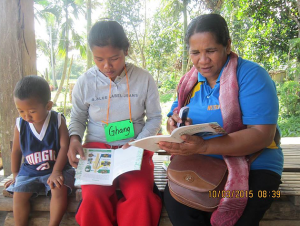
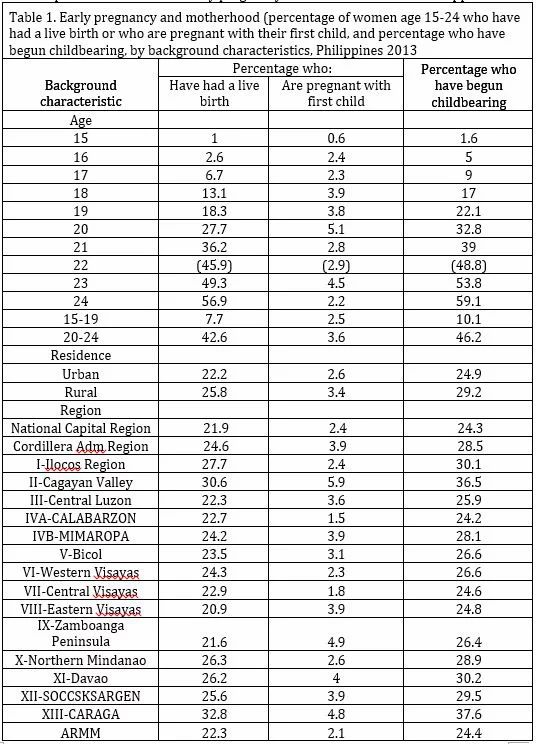
Thus, ‘young mothers to be’ are frowned upon but little has been done. Interventions are made to address maternal care, health, nutrition, hygiene but not sex education prior to getting pregnant. The National Statistics Authority (2014) reported that one in ten young Filipino women age 15 to 19 is already a mother or pregnant with their first child. Based on NSA’s gender quick stat report, there were 9,676,094, 15-19 years old with a ratio of 50.8% male to 49.2% female in 2013. Alarming is the fact that young adults have begun childbearing at the age of 15 at 1.6% and at 22% at age 19. In some cases, like indigenous groups, younger mothers as early as 10 could have a baby as soon as menstruation occurs.
The Journal of Philippine Statistics (2010) on Statistics of Filipino Children reported “Child sexual abuse is one of the profound violations of the rights of children. While it is the most underreported form of abuse due to its sensitive nature, cases of sexual abuse of girls and boys continue to be noted. From 2004 to 2008, the DSWD served a total of 13,658 girls and boys due to this.” Some of these are incestuous done by fathers, brothers, uncles, grandfathers, cousins, and stepfathers apart from rape cases. Usually, the mother is the accomplice to save face and keep the reputation of the family intact. The effects of such initiation can be long-term and could manifest into adulthood.
Overall, 10.1% in this age bracket had a child. In the old basic education curriculum, at age 16 or 17, students should have been in first year college or in university. (The K+12 curriculum will only have its first batch of graduates by 2017). But what happened to this female age group?
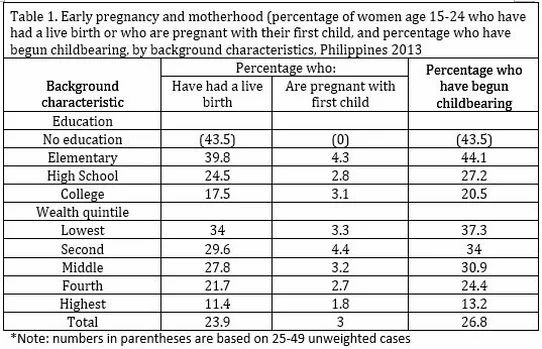
Most (25.8%) of the incidents occurred in rural areas but not so distant with urban areas as well (22.2%). The highest percentage of teenage pregnancy occurrence is in Region XIII or Caraga (37.6%). The Caraga region is composed of four provinces, namely; Surigao del Norte, Surigao del Sur, Agusan del Norte and Agusan del Sur. Ironically; Region XIII also had the highest simple literacy rate (meaning they can read and write) at 97.7%, which is even higher than that of the national average rate of 97.5%.
This implies that being in rural areas but with high simple literacy rate would not translate into having a mature outlook about sex notwithstanding that the Philippines is predominantly Catholic. In 2010, according to the latest census of the National Statistics Office, 74,211,896 million are followers of the Roman Catholic Church, or 80.6% of the Philippine population. As Catholics, followers are prohibited from engaging in premarital sex. By law, the legal age to get married is 18 years old for women and 21 years old for men. It implies then that these teen pregnant women are not married or have children out of wedlock and could have been Catholics.
The incidence of teen pregnancy though is prevalent across the country, which goes to show that its occurrence transcends nature of residence and literacy levels. Statistics seems to point to the fact, however, that low educational qualification (44.1%) and those belonging to the lowest wealth quintile (37.35) are the most affected.
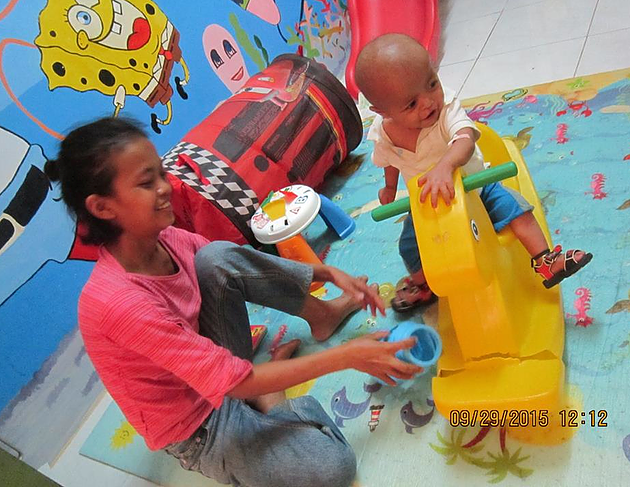

The body of a teen according to neuroscientist Frances Jensen as cited by Elmastry (2015) changes when they reach puberty to look like that of adults and presumably their brains as well. Jensen says, “Not true. The brain is the last organ in the body to mature. It takes into mid-20s for it to complete.” The chemistry and structure of the teenaged brain is only about 80% of its final form.” It implies that while the body looks like that of an adult, the brain is still incomplete and therefore a teen does not have the right mind to decide on things that adults do but do it just the same because of self-entitlement.
As millennial, where they mostly live virtually, self-entitlement becomes more of a norm rather than an exception. Luna, web writer of Loner wolf, forwards 16 signs of self-entitlement complex as follows:
-
You impose unrealistic demands onto your family, children, friends, acquaintances, lovers, employees, and/or employers.
-
You tend to feel sorry for yourself if things don’t work out the way you wanted (self-pity) and openly advertise this in melodramatic, attention seeking ways.
-
People have called you a “bully,” “manipulative,” “ruthless,” “egotistical,” “vain,” or a “liar.
-
You believe you deserve happiness and go to great, sometimes extreme lengths to ensure that happens, often at the expense of others.
-
You punish people when they don’t do what you want either passively (e.g. silent treatment, gossiping, spreading rumors) or aggressively (e.g shouting, verbally/physically abusing).
-
In order to “succeed” in life, you believe in going to any lengths.
-
You constantly see other people as competition or “threats.”
-
You tend to exhibit many double-standards in the way you behave/interact with other people, e.g. I can be late and forget my duties and commitments, but YOU can’t; I can treat myself, but YOU can’t; I can abuse or disrespect you, but YOU can’t to ME.
-
You tend to take more than give in friendships and relationships.
-
You tend to look out for yourself, your needs and desires more than anyone else almost 100% of the time.
-
You have a hard time negotiating or compromising.
-
You have a deep-seated conviction that you have priority and should always come first, even at the expense of stepping on others.
-
People always seem to be offended or upset by what you do or say.
-
You generally think that you are better, or more important, than other people and should see this and unquestioningly respect you.
-
You crave admiration and adoration.
-
You like to assert your dominance or superiority over other people, finding it second nature.
These are dangerous assumptions but in this age and time of digital communication, various social media platforms have a created a virtual world that can occur offline as well.
Causes of teen pregnancy
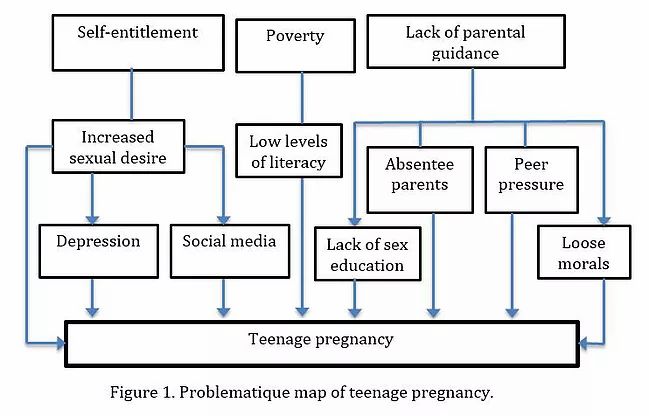
Using the Problematique Method, what then could be the culprits of teenage pregnancy? The problematique method forwarded by Molenda and Di Paolo (1978) aims to identify causes of the problem by tracing and differentiating between symptoms called “subordinate influential factors” and root causes referred to as “superordinate influential factors.” They argued that in any given system, problems are usually interrelated, one being the cause or the effect of another. In the process, decision-makers usually cannot differentiate between the symptom and the cause. Unless the root causes are addressed, the problem will continue to occur. This method of analysis is illustrated using a problematique map. The box in bold lines contains the problem to be addressed. Symptoms are listed in boxes connected by arrows. The boxes without any arrows are considered the root causes and should therefore be addressed.
Applying the method, on teenage pregnancy as the problem, it can be surmised that this is caused by lack of sex education, loose morals, absentee parents, and peer pressure as the subordinate influential factors or the symptoms of the problem. The root cause of the problem would be lack of parental guidance. In the Philippines, talking about sex in the family is taboo or hardly discussed. Parents would learn about the children’s sexual activities only when their tummies or their girlfriend’s tummies bloat. While PDA (public display of affection) is common among girl-boy relationships, parents would seldom reprimand their children on the notion that one is encroaching into their privacy. Being reprimanded in front of their girlfriend or boyfriend can be a source of embarrassment and can cause rebellion or at times elopement or suicide. Parents are very cautious in discussing about sensitive issues like sex to avoid further complication of the situation. Some parents though are too strict that could lead to the same results. Since parents are absent which is sometimes the case of Overseas Filipino Workers, children have loose morals being free.
The lack of sex education is something that is rarely talked about at home or in school. Usually, young adults talked about sex with their friends or their peers. In case they have friends who are engaging in sex, they too would feel being cast away of fear of being lose out so they end up doing it. Thus, parents are a lost on how to approach their children as far as sex life is concerned making it a root cause of teenage pregnancy. Normally, parents would have the baby but would not allow their children to get married. On the other hand, the young mom to be would get an abortion. Either way, consequences are detrimental to the family and society. The more parents get in the way of their children’s affair, the more they become rebellious.
Another root cause is poverty, symptom of which is low literacy levels. Due to poverty, these teenagers cannot go to school to further their studies. Impoverished people sometimes divert their attention to other things like drugs or sex for lack of self-esteem and poor self-concept. These are defense mechanisms to forget their real conditions. Having a family of her own may save her from the perils of poverty on the assumption that the new family will accept her.
A concomitant symptom of teenage pregnancy is the environment; in this case, social engagement through online platform. Social media has become a fertile ground for intimate relationships whether offline or online. Use of SMS (the Philippines being dubbed as the texting capital of the world once) has been taken over by use of chats and tweets or Instagram that makes communication really fast.
According to the Internet and Mobile Marketing Association of the Philippines (IMMAP), in mid-2014, Internet users reached 38 million out of a population of 100M, which could increase due to the lowering cost of Internet access and devices. Of these, two-thirds are below 30 years old. Around 22M Filipinos accessed their Facebook accounts via smartphone or tablet in the Philippines. Such penetration and usage can readily translate to increased sexual appetite as another symptom of teenage pregnancy. Meet ups or EBs (eyeball) are rampant to put closure to the online relationships. Cybersex is “normal” in many countries including the Philippines maybe because one can defy getting pregnant but left much to be desired.
Another symptom is depression. When one is depressed or sad about family relationships or their socio-economic status, they resort to looking for somebody that can erase their sadness. One of which is their boyfriend, which would eventually lead to sex. This is sad because such depression could have been caused by many factors like broken families or with parents working overseas. Loneliness and dissatisfaction can lead to depression. A digital native would resort to expressing one’s dissatisfaction online to release the burden. A soulful and gentle armor, which is the boyfriend or prospective one, bears and eases all the pain. As gratitude, the young girl succumbs to sex.
These are being done because of self-entitlement, the other root cause of teenage pregnancy. Regardless, of literacy levels, socio-economic status, or age, there is no way for both parties to find out the real age of the online user. Everyone on the web feels they have the right to say what they want to say; post what they want to post; publish what they want to publish; or even relate to whoever they want to have sex with. The virtual world becomes a reality. Social media had leveled the playing field. No old, no young, no adolescents. Everyone is equal. Therefore, anybody can do what he or she thinks they need to do.
Consequences are easy to come but the larger effect on development issues takes a back seat. The poor becomes poorer because parents will have to take care of the new addition to the family. The lowly educated has to drop out from school to attend to the child or look for a job to fend for the baby. In cases of abortion, the young mother cannot tolerate the effects on one’s body and mental sanity. At a young age, the mother may want to continue with the pregnancy because it is her baby. That is instinct. The parents, on the other hand, would not want to be shamed so they rather have the baby aborted. Either way, problems become so complex that the unborn child would prefer not to be born. In some cultures, reputation of the family is more important than having the new addition or the life of the daughter. Hence, they kill them both.
More often than not, these young mothers are poor with low literacy levels based on statistics but runs across socio-economic status and if it continues to be ignored; the future of this country will be dismally maligned. The government should heed to the problem for the future depends on the quality of the next generation. Given the country’s strength on Internet and mobile technology penetration, the lack of sex education can be addressed through using what they are addicted to, the cellular phone or the Internet. In the digital age, digital natives can be reached digitally. Talking about sensitive topic online like sex education could be a potent tool not only for teenagers but parents as well. Through short messages like tweets, simple reminders about not having sex can go a long way. An online course on sex education to raise the morals of teenagers can help them decide whether to engage in sex or postpone it when the time is ripe for them to do so. They will not feel embarrassed to answer or read the tweets because these are sent personally to their accounts. They need not talk to a counselor or a priest or a barangay health worker if they are ashamed in the event that others see them. A holistic approach in combating teenage pregnancy must be a collaborative effort among stakeholders especially with the ASEAN region.
The incidence of teenage pregnancy is likewise prevalent in the region but with the Philippines topping the list. Given the move for ASEAN integration, it is but logical for sex education through digital means is carried out. However, given the low educational qualification of those greatly affected, the government, local government units or private companies through their corporate social responsibility initiatives can help by giving them an opportunity to be economically productive. As such, these young mommies can regain their dignity, earn integrity, and be empowered to raise their own children.
The intervention can also prevent teenage pregnancy to happen because they can divert their attention to more productive activities like being economically gainful and could perhaps an avenue for them to continue their studies. The Department of Education should strengthen other education delivery modes like distance learning where they can study anywhere and anytime. Concrete non-formal education programs on sex education can likewise be offered to parents, both father and mother so that they can properly relate to their children.
Talking about sex should not be seen as taboo but rather a necessity to prevent the younger generation from engaging to something that they will regret later in life. The ability of the parents to talk about sex openly electronically may somehow ease the burden of discussing the topic face-to-face. Nowadays, sensitive issues are easily expressed digitally that loosens up the sender’s disposition to say what they have to say. Self-entitlement as the new normal can be capitalized on so that both child and parent can express themselves more truthfully to one another. The ‘forward’ button can bridge the gap of telling something sensitive that can reduce the harm of saying those instead in person.
Discussing sex on the table or in a private room with the children is not usually done or anything that would cause embarrassment. This is a cultural practice that exists to date. These topics are openly shared with peers or close elders but not their parents. There are exceptional cases where healthy discussions about crushes or love life can occur if these have been done early on when children were still very young.
The use of social media like Facebook especially among children of Overseas Filipino Workers and their parents abroad has become a communication platform where self-expression surpasses inhibition and instead lends to spontaneity of thoughts. The ability of teenagers or the millennial to use their best friend (their gadgets) to communicate should also be the way to get them back on track. The same platform can also be used to detect whether children are suffering from depression or sadness, which can also be a symptom of teenage pregnancy. The digital platform can create services that are responsive and addresses sexual concerns in real time. The ability of digital technology should be harnessed to serve the common good.
The teenage mother should then be able to finish secondary school, must be equipped with marketable skills, financially independent and should continue to live at home and mentally mature.
References:
Recide, R. One in Ten Young Filipino Women Age 15 to 19 Is Already A Mother or Pregnant With First Child (Final Results from the 2013 National Demographic and Health Survey) – See more at: https://psa.gov.ph/content/one-ten-young-filipino-women-age-15-19-already-mother-or-pregnant-first-child-final-results#sthash.FzPMXaYu.dpuf
https://psa.gov.ph/content/one-ten-young-filipino-women-age-15-19-already-mother-or-pregnant-first-child-final-results
https://psa.gov.ph/statistics/quickstat/gender-quickstat/2013
https://psa.gov.ph/sites/default/files/4thQ2010.pdf
http://www.philstar.com/business/2013/12/31/1273515/phl-literacy-rate-improves-97.5-nso
http://www.rappler.com/newsbreak/iq/81162-map-catholicism-philippines
Elmasry, Faiza. 2015. Understanding the teen brain key for better parenting. http://www.voanews.com/content/understanding-the-teen-brain-is-key-for-better-parenting/2622118.html
Luna, Alethia. http://lonerwolf.com/luna/
Molenda, M. and Di Paolo, A. 1978. An analysis of problems and possibilities of the audio-visual general department, USAID.