



November 26, 2015 | Dr. Lee Lee Loh Ludher
“If I have only 6 months to live, the last thing I want to do is work!”
Do you agree? That is what most people would probably say in my world. If this was true, then there would certainly be a major contradiction in my life. ‘Work’ is THE pursuit in most people’s life. Why then, does it become the last thing one wants to do when the end is near?
From early childhood and throughout most of their lives, people have given centrality to career, ambition, vocation or occupation. This centrality is even found in the reproductive work of women-defined as “the child-bearing / rearing responsibilities and domestic tasks undertaken by women, required to guarantee the maintenance and reproduction of the labour force. It includes not only biological reproduction but also the care and maintenance of the work-force (husband and working children) and the future work-force (infants and school-going children)” (Moser, 1992:29-31)
Education from primary to tertiary is tailored to produce the work-force for an economy. Any mis-match or unemployable graduates will be deemed as failure of the education system. Transportation is designed to take people to work in the fastest and most efficient ways.
Why is it then, that at the end of all of this, the last thing we want to do is to go to ‘work’?
To use one’s talent and faculties to pursue a profession, trade or occupation is noble and commendable. Work contributes to the social and economic development of a country and to the welfare and prosperity of all. It is a means for the acquisition of wealth and is praiseworthy to the extent that it serves as a means for achieving higher ends for example for meeting one’s basic necessities, for fostering the progress of one’s family, for promoting the welfare of society, and for contributing to the common good. It is also important that work generates wealth and enriches the generality of the people bringing about social justice. But if work is related to the exploitation of others, the monopolization and manipulation of markets, and the production of goods that promote violence and immorality, it no longer contributes to the betterment of the society. It is worse when work becomes an obsession or for the accumulation of wealth motivated by greed. Then work becomes the curse instead of a blessing.
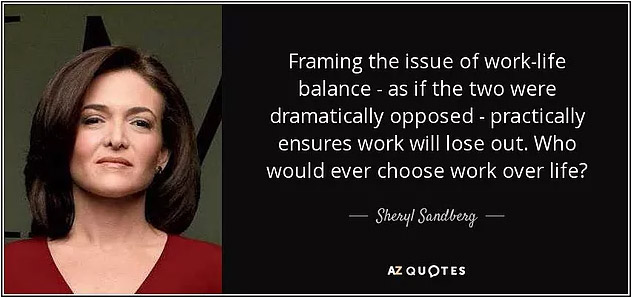
Work can also be at the center of contention with life as well. The tension between the reproductive and productive roles causes what Myrdal and Klein (1968) refer to as the ‘féminine dilemma’. Without men taking their share of domestic responsibilities, women are often faced with the dilemma of choosing between productive or reproductive work. Work-life conflict or work-family conflict today is no longer gender specific. A study by Center for American Progress showed that 90% of working mothers and 95% of working fathers report to experience work-family conflict (Williams and Bousley, 2010). According to The CQ Researcher Online at the Wayback Machine, Steven Sauter of the National Institute for Occupational Safety and Health in Cincinnati stated that “the workplace has become the single greatest source of stress.” Many employees expose themselves to high levels of stress trying to be the ‘ideal worker’ on the job, working long hours and taking work home, thus giving little time and energy to other aspects of life. Depression, burnout and other diseases cost Germany for example, 41 million absent days and led to 3.9 billion Euros in lost production costs (Frank, 2010).
Similarly, there are a lot more hidden social costs to family, children and society as a whole that is not accounted for. There are millions of home alone children (e.g. latchkey kids), left behind (in rural and remote villages while parents or spouses work in the cities or overseas) and broken families. Gifts and once a year or longer visits cannot be the remedy for the pain and deprivation of a wholesome and fulfilling family life.
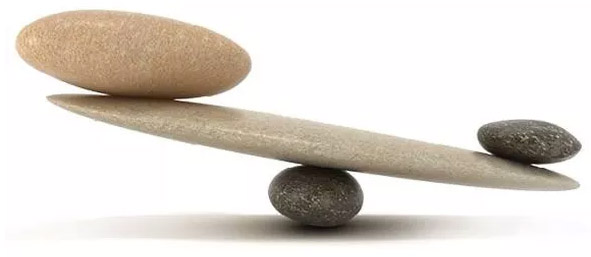
Work Life Balance is often depicted as a see-saw – sacrificing one to gain more of the other. This cannot be the solution. Donald Trump suggested “If you’re interested in ‘balancing’ work and pleasure, stop trying to balance them. Instead make your work more pleasurable.”
“As with all matters of the heart, you’ll know when you find it.”
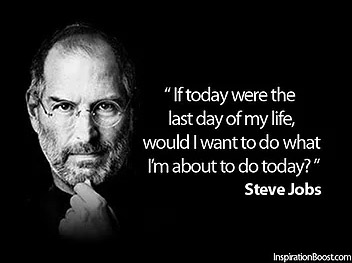
Steve Jobs has this piece of advice: “Your work is going to fill a large part of your life, and the only way to be truly satisfied is to do what you believe is great work. And the only way to do great work is to love what you do. If you haven’t found it yet, keep looking. Don’t settle. As with all matters of the heart, you’ll know when you find it.”
Another piece of good advice comes from Paul Krassner: “one of the aspects of happiness is when you can make as little distinction as possible between your work and your play.”
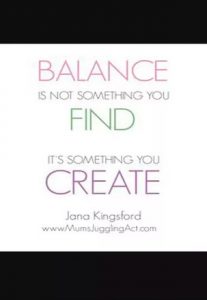
Perhaps, the center of our life should be ‘life’ itself and orbiting around it are the social, material, spiritual, cultural and intellectual aspects that come in the form of work, health, family, religion, service to community and others. Love for life maybe that gravitational pull which keeps all aspects of our life, including work, in balance. Thus, we can integrate and bring into coherence work and life.
For more references, please refer to the video links:
References
Krassner, Paul, Henry Adler, Richard Claus, Laura Godofsky, Irwin Rosen, Carole Quinn and Avima Ruder (1963), ‘An Impolite Interview with Paul Krassner’ in The Realist n. 41, June 1963
Moser, Caroline (1992), ‘ Adjustment from Below : Low income Women, Time and the Triple Role in Quayaqquil, Equador, in Afshar, H and C. Dennis (eds) Women and Adjustment in the Third World, Macmillan, London
Myrdal, Alva and Voila Klein (1968) Women’s Two Roles: Home and Work, Routledge and Kegan Paul, London edition.
Williams, J and H Bousley (2010) The three Faces of Work-Family Conflict – the Poor, the Professionals and the Missing Middle Center, Center for American Progress, Hastings College of the Law.